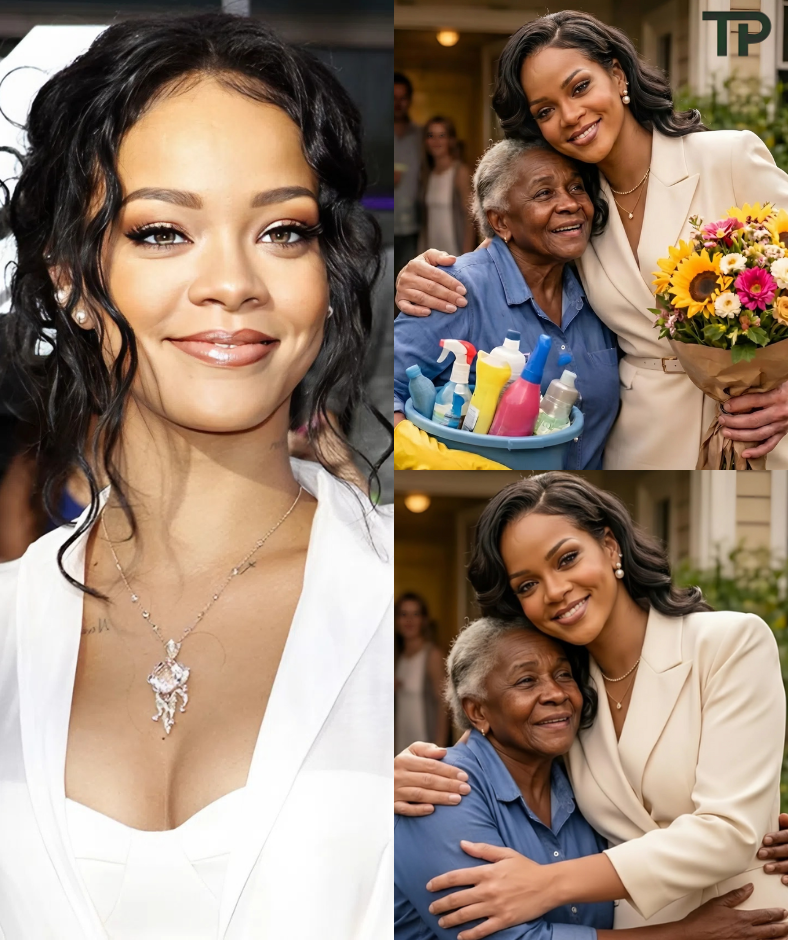
Rihanna has lived through countless defining moments on the world stage, but none of them prepared her for the quiet revelation that came from home. It was not an award show, a record‑breaking single, or a fashion empire milestone that shook her most deeply, but the discovery that Alma Robinson, the caretaker who had helped raise her, was still cleaning homes at eighty years old. For Rihanna, the realization was surreal, as if time had propelled her forward into privilege and recognition while leaving Robinson anchored in the same exhausting routines. The image of her swollen, work‑worn hands—hands that once tied Rihanna’s shoelaces and braided her hair—was impossible to ignore. “She was never just a helper,” Rihanna later reflected. “She was part of the emotional framework of my youth.”
In her childhood, Mrs. Robinson was more than a caretaker. She was a witness to the fragile dreams of a girl who aspired to greatness, a defender of her ambitions when others dismissed them as unrealistic. She encouraged her after disappointments, reminded her that character mattered as much as talent, and instilled discipline when frustration threatened to overwhelm her. Her presence was quiet but constant, a stabilizing force that gave Rihanna the confidence to pursue a path few believed possible. Those early lessons became the foundation of her career, shaping not only the artist she became but the woman she would grow into.
Yet while Rihanna’s life transformed into one of stages, studios, and headlines, Mrs. Robinson’s remained tethered to survival. She woke before dawn, scrubbed floors, and pushed through pain to meet the demands of her work. The contrast unsettled Rihanna deeply. She remembered a promise she had once made as a child, spoken with innocence and without resources: “One day, when I make it, I’ll take care of you.” Most children forget such vows as adulthood accelerates, but Rihanna never did. She chose not to announce her intentions publicly or invite attention. Instead, she went to see her.
When Mrs. Robinson opened the door and recognized her, years seemed to collapse into a single moment. There were no cameras, no speeches; only a long, heartfelt embrace filled with memories and gratitude. Inside her modest home, Rihanna noticed the subtle signs of endurance that success stories often ignore: medical bills stacked neatly on a table, a calendar filled with cleaning appointments, furniture worn not by neglect but by persistence. That evening, she listened more than she spoke. Mrs. Robinson never complained or asked for help. She spoke calmly, even as fatigue shaped her movements. The next morning, Rihanna acted. She paid off her debts, secured her home, and ensured she would never need to clean another house to survive.

What followed transformed a private act into something far greater. When word quietly spread, public reaction was immediate and emotional. People were moved not because of money, but because of memory. They saw gratitude expressed without performance, loyalty honored without spectacle. “It wasn’t about charity,” one commentator observed. “It was about remembering who stood beside you before anyone else believed.” The story resonated in a culture often dominated by visibility and branding, reminding people that true greatness is measured not only by achievement but by responsibility to one’s past.
Rihanna did not stop with Mrs. Robinson. She quietly expanded her efforts, identifying elderly domestic workers who had spent their lives serving families without safety nets. She helped fund housing, healthcare, and dignified retirement for people often overlooked. What began as one promise evolved into a framework for impact. Artists noticed. Business leaders paid attention. Ordinary people began asking themselves which promises they had forgotten. The movement grew not through marketing, but through example, challenging assumptions about loyalty and success.
Debate inevitably followed. Some critics argued that stories like this risk romanticizing inequality, suggesting that individual acts of generosity cannot substitute for systemic change. Supporters countered that awareness must begin somewhere, and Rihanna had sparked a conversation that mattered. Online discussions intensified, pushing issues of labor, aging, and gratitude into mainstream spaces. Why do those who care for others often age without protection or security? Why does society celebrate success but forget those who helped make it possible? These questions became part of the legacy of Rihanna’s choice.
Meanwhile, Mrs. Robinson stepped into a life she never expected. She rested. She smiled more often. She watched Rihanna perform, not as the global icon, but as the girl she had always believed in. Her pride did not come from trophies or contracts, but from memory. When asked privately why she chose to act quietly, Rihanna reportedly said, “I wasn’t raised to repay kindness with attention. I was raised to repay it with loyalty.” In a digital world obsessed with visibility, that sentiment struck a chord. People shared the story not because it was perfect, but because it felt human. It challenged the notion that greatness is measured only by achievement, reframing success as responsibility rather than distance from one’s past.
The controversy never fully disappeared. Some questioned motives, others demanded more accountability from public figures. Yet the conversation itself became the real outcome. It forced reflection on how society treats its quiet builders. It asked whether gratitude should expire with time. It reminded people that promises made in childhood still matter—especially when they are kept. Rihanna did not create a miracle. She honored a memory. And in doing so, she helped spark a movement that continues to challenge how people define success, loyalty, and character. Sometimes the most powerful change does not come from speeches or awards. It comes from remembering who stood beside you before anyone was watching, and choosing, years later, not to walk past that truth.